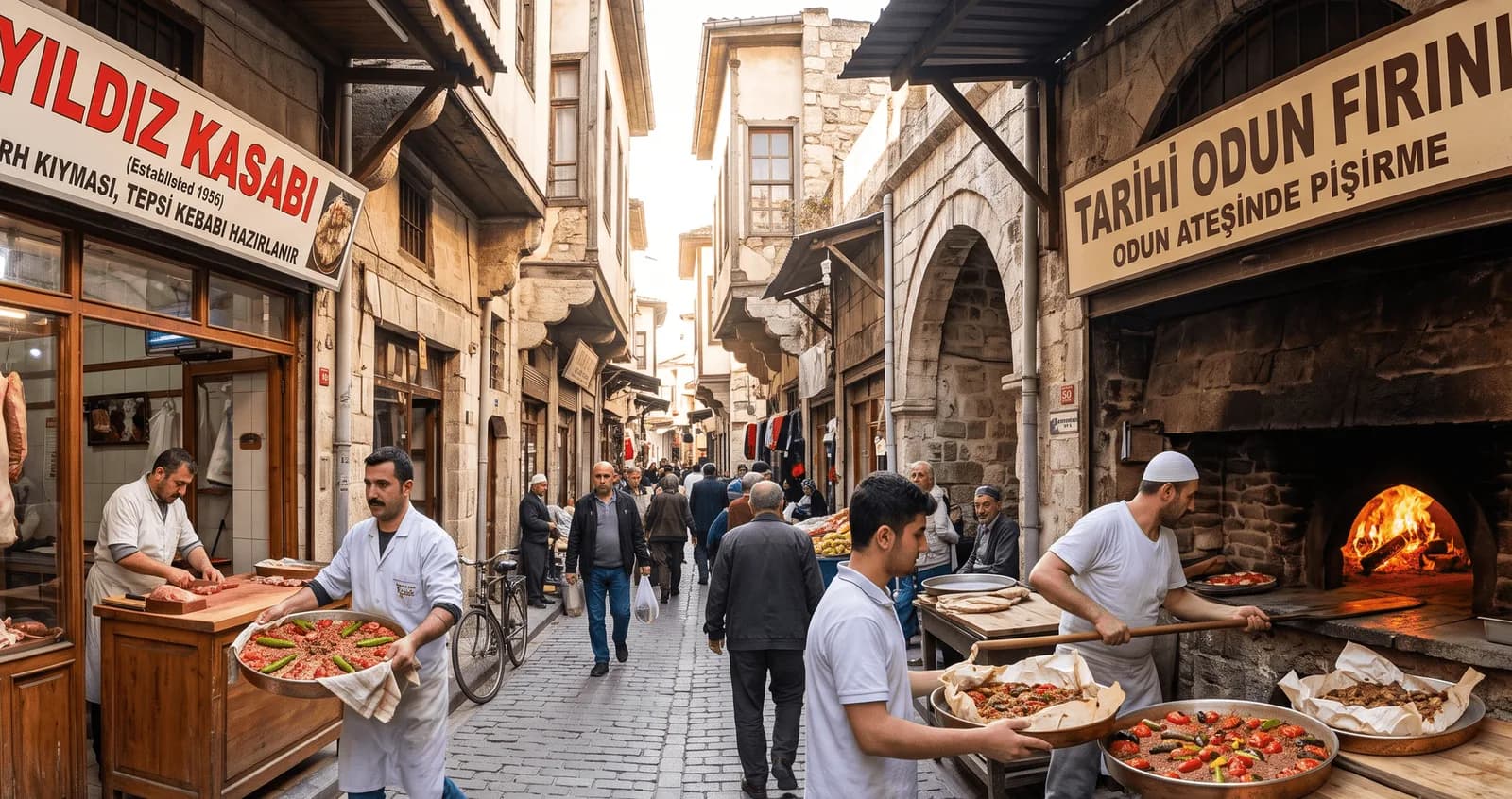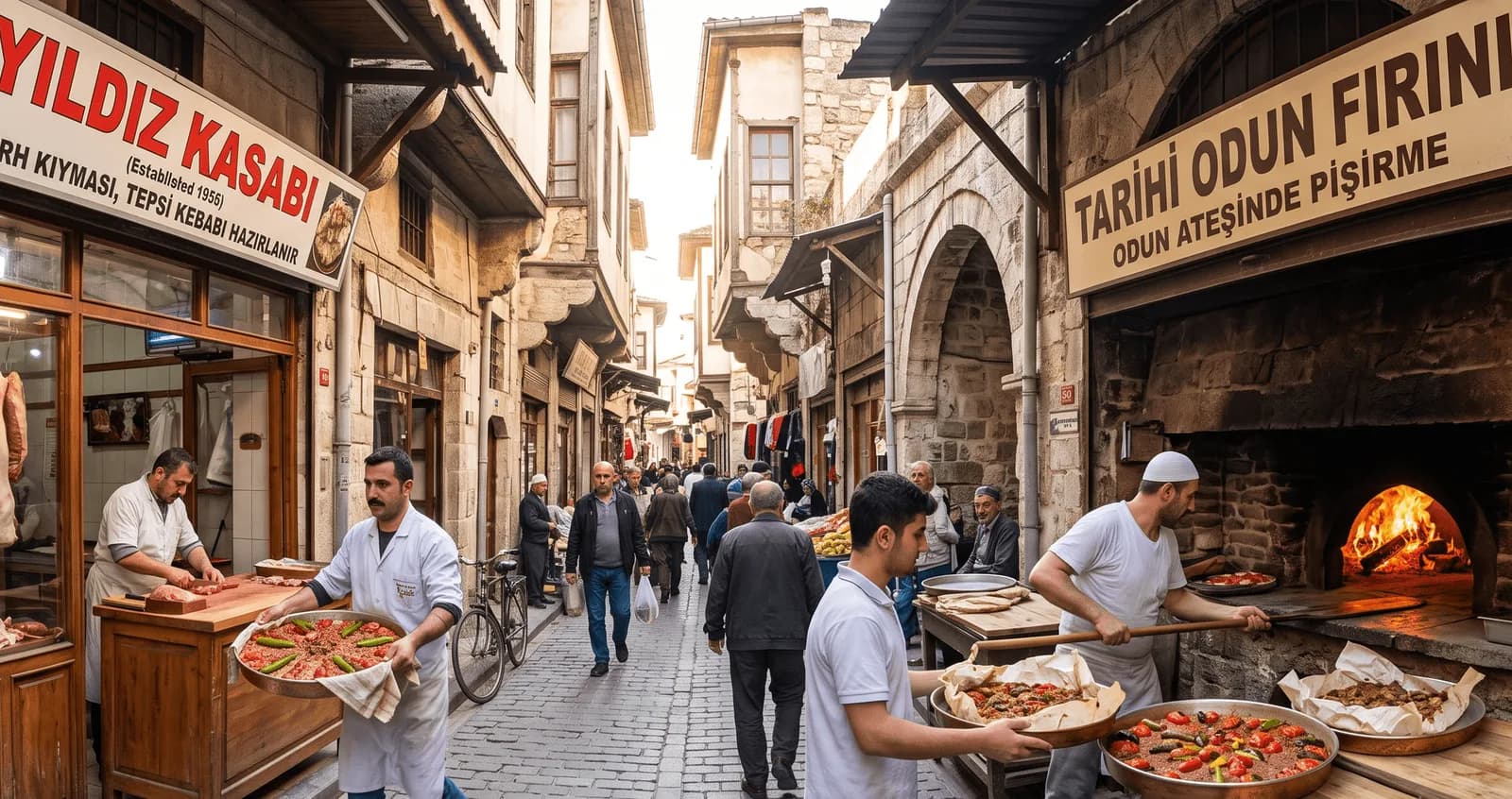
If you see people running down the streets of Antakya holding a metal tray in their hands, don't be surprised. Here, kebab isn't crafted in a restaurant; it takes shape under the butcher's heavy cleaver (zırh) and bakes in the neighborhood bakery’s oak-wood fire. In the second part of our series, we examine the unique artisan culture behind Hatay’s world-famous Tray Kebab (Tepsi Kebabı) and Paper Kebab (Kâğıt Kebabı).
In most places around the world, dining out is simply a matter of sitting down at a restaurant and placing an order. In Antakya, however, this process turns into a ritual of century-old artisan solidarity and neighborhood culture. At the heart of this tradition lies that legendary "50-meter" journey between the local butcher shop and the stone-oven bakery.
The Rhythm of the Cleaver and Meat Turned Art
The secret of an authentic Antakya kebab lies not in a meat grinder, but in the butcher's curved double-handed cleaver, known as the zırh. The butcher carefully selects local male lamb meat and hand-chops it alongside garlic, red pepper paste, fresh chili peppers, and parsley. The rhythmic thud of the zırh hitting the wooden chopping block is the most familiar symphony echoing through Antakya’s historic Long Bazaar (Uzun Çarşı).
Two Sibling Flavors: Tepsi or Kâğıt?
Although both share the same culinary heritage, they differ in presentation and texture:
Tepsi Kebabı (Tray Kebab): The hand-chopped meat mixture is spread thinly over the bottom of a round copper or aluminum tray. Topped with sliced tomatoes, green peppers, and a light tomato paste glaze, it is sent straight to the bakery. Out of the oven, the meat releases its juices, creating a flavorful pool in the tray—dipping warm bread into it is practically a rule.
Kâğıt Kebabı (Paper Kebab): The spiced meat is pressed paper-thin onto greaseproof butcher paper. As it bakes in the stone oven, the meat juices are sealed right inside the paper wrapper. It is served immediately on the very paper it was baked in, delivering a deeply concentrated, seared flavor.
The Magic of the Neighborhood Bakery
Once prepared at the butcher, the kebab tray is rushed by young apprentices to the nearby neighborhood bakery. The baker master constantly shifts the tray’s position over the oak-wood fire to ensure perfectly even cooking. When the fresh flatbread (tırnak pidesi) thrown into the oven alongside the tray meets the hot, savory juices, you instantly realize why Antakya’s kebab culture can never be replicated.
💡 MASTER’S SECRET (İbrahim Usta / Butcher of 40 Years)
"The meat for a proper Tepsi Kebabı shouldn't be too lean; you need to blend in meat from the lamb breast (döş). When hand-chopping with the zırh, you must be careful not to crush the meat so it holds onto its natural juices. And most importantly: the pepper paste sauce should never overpower the taste of the meat—it should only accompany it."
👨🍳 FOR THOSE WHO WANT TO TRY AT HOME: Home-Style Antakya Tepsi Kebabı
Ingredients:
500g medium-fat hand-minced lamb/beef mix
1 red kapia pepper & 2 green chilies (extremely finely chopped)
3 cloves garlic (minced)
1 tsp red pepper paste
Salt, black pepper, cumin
For Topping: Tomato and green pepper slices, 1 tbsp red pepper paste mixed with 50ml warm water
Instructions: Knead the minced meat together with the finely chopped peppers, minced garlic, and spices until combined. Press the mixture evenly (about 1 cm thick) into the bottom of a baking dish or round pan. Arrange the tomato and pepper slices on top and pour the diluted pepper paste water over the dish. Bake in a preheated oven at 200°C (390°F) for 20–25 minutes until browned and sizzling. Serve hot with flatbread.